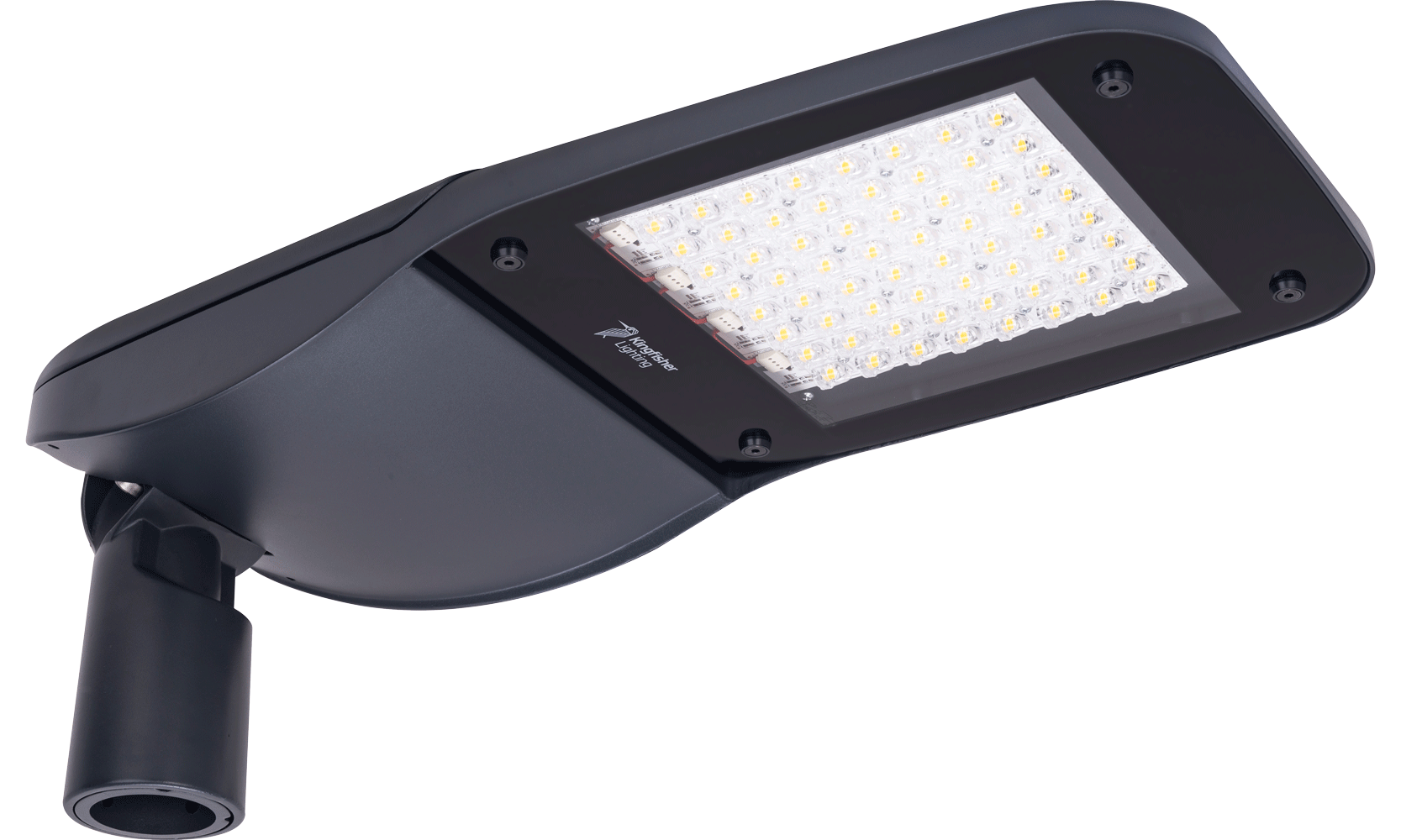
In floodlighting design, control matters just as much as output. Flat glass luminaires can help improve optical control, reduce unwanted light spill and support better visual comfort across large exterior environments.
Across sports facilities, logistics yards, industrial sites and public realm projects, lighting systems often need to achieve a careful balance between performance, precision and environmental consideration. Flat glass floodlights are increasingly used where a more controlled lighting distribution is required, helping designers manage glare and limit obtrusive light beyond the intended area.

Flat glass floodlighting can support more controlled exterior illumination across demanding large-scale environments.
What Is Flat Glass Floodlighting?
Flat glass floodlighting refers to luminaires designed with a flush front glass surface rather than a protruding or curved front lens. While this may appear to be a small design detail, it can play an important role in how light is emitted and controlled.
In exterior applications, flat glass designs are often selected where optical precision, reduced upward light and improved visual comfort are important considerations. When combined with well-designed optics, this approach can help direct light more accurately towards the intended area.
Why Flat Glass Matters
In large outdoor environments, poorly controlled light can lead to excessive glare, light spill and wasted output beyond the area being illuminated. This can affect visual comfort for users and increase the impact of the installation on surrounding spaces.
Flat glass floodlights are often specified because they can contribute to a more controlled luminaire design, helping to:
- Reduce unwanted upward light
A flatter front surface can help support more controlled light emission, reducing wasted output above the horizontal plane.
- Improve visual comfort
Careful optical control can help limit harsh brightness and reduce discomfort glare for users within the lit environment.
- Support more precise illumination
By directing light where it is needed, flat glass floodlights can contribute to a cleaner and more efficient lighting scheme.
Flat Glass and Glare Control
Glare is one of the most important considerations in floodlighting design, particularly across environments where visibility and user comfort are critical. In sports facilities, industrial sites and logistics yards, poorly controlled glare can affect how easily users perceive surfaces, objects and potential hazards.
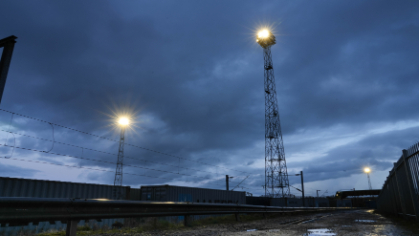
Flat glass luminaires can help support glare reduction by contributing to a more controlled optical system. However, glare performance also depends on factors such as mounting height, luminaire aiming, beam distribution and the optical design of the fitting itself.
For this reason, flat glass should be viewed as part of a wider floodlighting design strategy rather than a standalone solution. When specified correctly, it can support a more comfortable and controlled lighting environment.
Reducing Light Spill in Exterior Environments
Light spill occurs when illumination extends beyond the intended area, affecting neighbouring properties, roadways or external landscapes. In large-scale exterior projects, this can become an important planning and environmental consideration.
Flat glass floodlights are often used where designers need tighter control over light distribution, helping to reduce obtrusive light and improve the overall precision of the scheme. This is especially relevant in projects where surrounding environments need to be protected from unnecessary illumination.
In the UK, lighting designers may also need to consider guidance such as the Institution of Lighting Professionals (ILP) environmental zones, where spill light, glare and sky glow can all influence design decisions.
Where Flat Glass Floodlights Are Used
Flat glass floodlights are particularly effective in applications where lighting control and visual comfort are key priorities. Typical environments include:

- Sports Facilities
Helping improve visual comfort for players, officials and spectators while maintaining effective illumination across the playing area.
- Industrial Sites
Supporting controlled lighting in operational areas where safety, visibility and glare reduction are important.
- Logistics Yards
Helping direct light accurately across loading bays, service roads and manoeuvring spaces.
- Public Realm Projects
Supporting more considerate lighting design in environments where surrounding visual impact must be carefully managed.
Precision Floodlighting with VASTA
The VASTA floodlight collection has been developed to deliver powerful, controlled illumination across demanding exterior applications. Designed for environments such as sports facilities, logistics hubs, industrial sites and large operational spaces, VASTA combines high-performance LED output with advanced optical control.
Where lighting schemes require precision, visual comfort and effective management of spill light, flat glass configurations can support a more considered floodlighting approach. This helps designers achieve strong illumination performance while improving control over where light is distributed.
With a focus on efficiency, reliability and optical precision, VASTA supports modern floodlighting design where performance and control must work together.
Designing for Control
Flat glass floodlights are one part of a wider lighting design strategy focused on delivering controlled, effective and environmentally considerate illumination. To achieve the best result, luminaire selection should always be supported by suitable mounting arrangements, aiming angles, optical choice and lighting calculations.
Professional lighting design helps ensure that floodlighting schemes do more than simply deliver output. It allows designers to balance visibility, uniformity, glare control and spill light management to create a scheme tailored to the application.
Explore the VASTA floodlight range or speak to our team about controlled floodlighting design support.