Floodlighting plays a critical role in illuminating large outdoor environments where visibility, safety and operational performance are essential.
Across industrial sites, ports, logistics yards and sports facilities, well-designed floodlighting systems help ensure large operational spaces remain clearly visible during low-light or night-time conditions. Modern LED floodlighting technology has significantly improved lighting performance, enabling more efficient and precisely controlled illumination across large-scale environments.

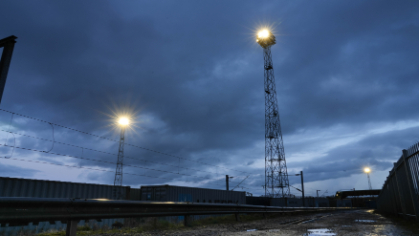
Modern LED floodlighting delivering controlled illumination across a large-scale exterior environment.
What Is Floodlighting?
Floodlighting is a form of lighting used to illuminate large outdoor areas where wide-area visibility is required for security, safety and operational efficiency.
Commonly used across industrial sites, ports, logistics yards and sports facilities, modern LED floodlighting systems provide powerful, high-performance illumination to ensure safe and efficient operations across large-scale environments.
Where Floodlighting Is Used
Floodlighting is commonly used in environments where large operational areas must remain clearly visible during low-light or night-time conditions. These environments often involve vehicle movement, heavy equipment or public activity, making reliable illumination essential.

- Industrial Sites
Manufacturing facilities, storage yards and operational areas require consistent illumination to support safe working conditions and equipment operation.
- Ports and Container Terminals
Port environments rely on high-output floodlighting to support container handling, crane operations and vehicle movement across large open areas.
- Logistics and Distribution Yards
Logistics hubs and service yards require wide-area lighting to ensure clear visibility for drivers, loading operations and staff movement.
- Sports Facilities
Sports pitches and stadiums rely on high-performance floodlighting to ensure clear visibility for athletes, officials and spectators.
Common Floodlighting Problems
While floodlighting is essential for large outdoor environments, poorly designed or outdated lighting systems can create a number of challenges. Issues such as uneven illumination, excessive glare and uncontrolled light spill can impact safety, efficiency and environmental performance across large operational sites.

Uneven Illumination
Uneven illumination occurs when lighting levels vary across a site, creating bright areas alongside darker patches. In large environments such as logistics yards or industrial sites, inconsistent lighting levels can reduce visibility and make it more difficult for operators and drivers to clearly identify hazards.
In the lighting industry, this issue is often referred to as poor lighting uniformity. Uniformity describes how evenly light is distributed across a surface, and it is an important consideration in professional floodlighting design.
This issue is often caused by incorrect luminaire spacing, unsuitable mounting heights or poorly selected beam optics.
Excessive Glare
Excessive glare can occur when floodlights emit uncontrolled or poorly directed light towards the line of sight of users within the illuminated space. High glare levels can reduce visual comfort and make it more difficult for operators, drivers or athletes to clearly perceive objects, surfaces and potential hazards.
In floodlighting design, glare is typically influenced by factors such as luminaire intensity, mounting height, beam angle and the orientation of the fitting relative to the viewing direction. If these factors are not carefully considered, luminaires may produce high luminance values that negatively affect visual performance.
Effective floodlighting design therefore requires careful selection of optics and luminaire positioning to minimise glare while maintaining the required illumination levels across the site.
Light Spill and Light Pollution
Light spill occurs when light from a floodlighting installation extends beyond the intended lighting area. This can result in illumination of surrounding environments such as neighbouring properties, roadways or natural landscapes.
In lighting design, this form of unwanted light is commonly referred to as obtrusive light and is an important consideration for large outdoor installations. Excessive light spill can contribute to light pollution, sky glow and visual disturbance for nearby communities.
In the UK, lighting installations may need to comply with guidance such as the Institution of Lighting Professionals (ILP) environmental lighting zones, which set recommended limits for light spill, glare and sky glow depending on the surrounding environment.
Careful luminaire selection, optical control and accurate aiming are therefore essential to ensure light is directed only where it is required, reducing environmental impact while maintaining effective site illumination.
Inefficient Lighting Distribution
Inefficient lighting distribution occurs when light from a floodlighting system is not effectively directed towards the areas that require illumination. In poorly designed installations, a significant portion of the light output may be wasted outside the target area, reducing overall lighting performance.
This can occur when luminaires are selected with unsuitable beam distributions, incorrect mounting heights or poor optical control. As a result, additional luminaires may be required to achieve the desired illumination levels, increasing both energy consumption and installation costs.
Modern floodlighting design focuses on improving optical efficiency, ensuring that a greater proportion of the emitted light is directed precisely where it is needed. By using advanced optics and carefully designed beam distributions, lighting systems can achieve consistent illumination while reducing wasted light and improving overall energy efficiency.
Floodlighting Design Considerations
Effective floodlighting design requires careful planning to ensure lighting systems deliver consistent illumination while minimising glare, light spill and energy waste. Large outdoor environments often involve vehicle movement, operational equipment or public activity, meaning lighting performance must support both safety and visibility.
Mounting Height and Luminaire Positioning
The height and positioning of floodlights significantly influence how light is distributed across a site. Higher mounting positions can provide broader coverage, while careful luminaire placement helps reduce dark patches and improve lighting uniformity.
Beam Angles and Optical Control
Selecting the appropriate beam distribution is essential to ensure light is directed precisely where it is required. Advanced optical control helps minimise glare and reduce unwanted light spill beyond the site boundary.
Illumination Levels and Uniformity
Lighting systems must achieve the required illumination levels for the specific application while maintaining good uniformity across the illuminated surface. Consistent lighting helps improve visibility and reduces the risk of hazards in operational environments.
Lighting Calculations and Simulation
Professional lighting design typically involves detailed lighting calculations and simulation tools. These allow designers to model illumination levels, uniformity and glare before installation, helping ensure the lighting scheme meets both operational requirements and environmental considerations.
Modern LED Floodlighting Solutions

Advances in LED technology have significantly improved the performance and efficiency of modern floodlighting systems. Compared to older lighting technologies, LED floodlights provide higher luminous efficacy, longer operational lifetimes and improved optical control.
Modern LED floodlighting systems use advanced optics to deliver more precise light distribution, helping to improve lighting uniformity while reducing glare and unwanted light spill. This allows large outdoor environments to be illuminated more efficiently while maintaining consistent lighting levels across operational areas.
By combining high-performance LED output with carefully engineered beam distributions, modern floodlighting solutions allow lighting designers to achieve better visibility, lower energy consumption and improved long-term reliability.
Precision Floodlighting with VASTA

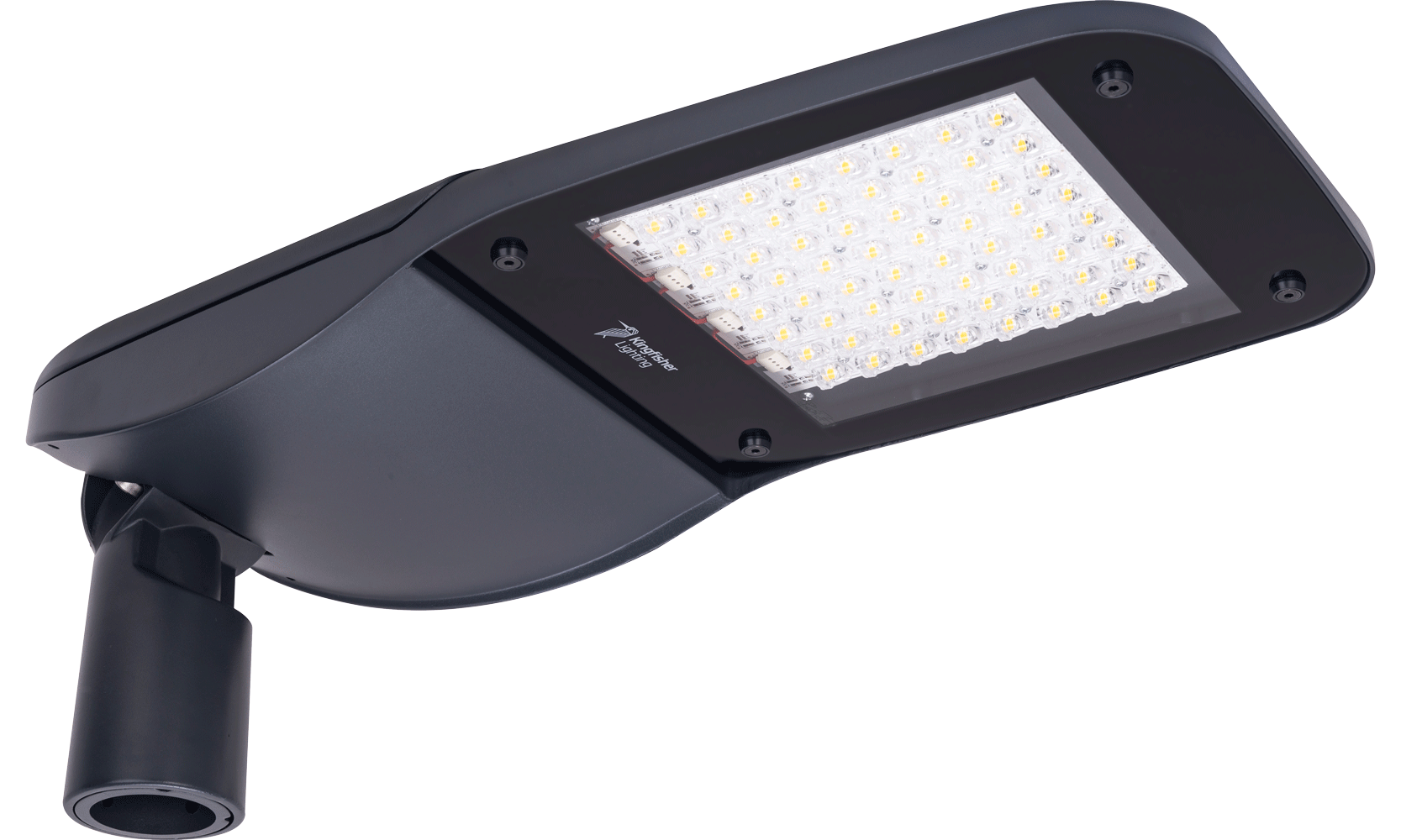
The VASTA floodlight collection has been developed to deliver high-performance illumination for demanding large-scale environments where reliable floodlighting is essential.
Designed for applications such as sports facilities, logistics yards, industrial sites and port environments, VASTA combines powerful LED performance with advanced optical control to ensure light is directed precisely where it is required. This helps lighting designers achieve consistent illumination across large areas while maintaining strong lighting uniformity.
Through carefully engineered beam distributions and high-output LED performance, VASTA helps address common floodlighting challenges such as uneven illumination, excessive glare and inefficient light distribution. By directing light accurately across operational areas, VASTA supports improved visibility, enhanced safety and efficient lighting performance.
With its robust design and precision optical control, the VASTA floodlight collection provides a reliable solution for large-scale floodlighting installations where performance and control are critical.
Floodlighting Design Support
Designing an effective floodlighting system requires more than selecting the right luminaire. Professional lighting design ensures that installations deliver the required illumination levels while maintaining uniformity, controlling glare and minimising light spill.
Through lighting calculations and simulation tools, designers can model lighting performance before installation, allowing illumination levels, beam distribution and luminaire positioning to be optimised for the specific application.
This process helps ensure lighting schemes are efficient, compliant and tailored to the operational needs of each site.
Explore the VASTA floodlight range or speak to our team about professional floodlighting design support.