Specifying LED floodlighting for sports and high mast facilities is becoming increasingly technical.
Delivering accurate lux levels for compliance is only one element of the process. To ensure the correct solution for your site, specifiers must also consider overall performance, optical control, uniformity ratios, energy efficiency and long-term maintenance requirements.
In this article, we explore the key factors that define high-performance LED floodlighting and what should be considered when developing a robust and future-ready exterior lighting scheme.
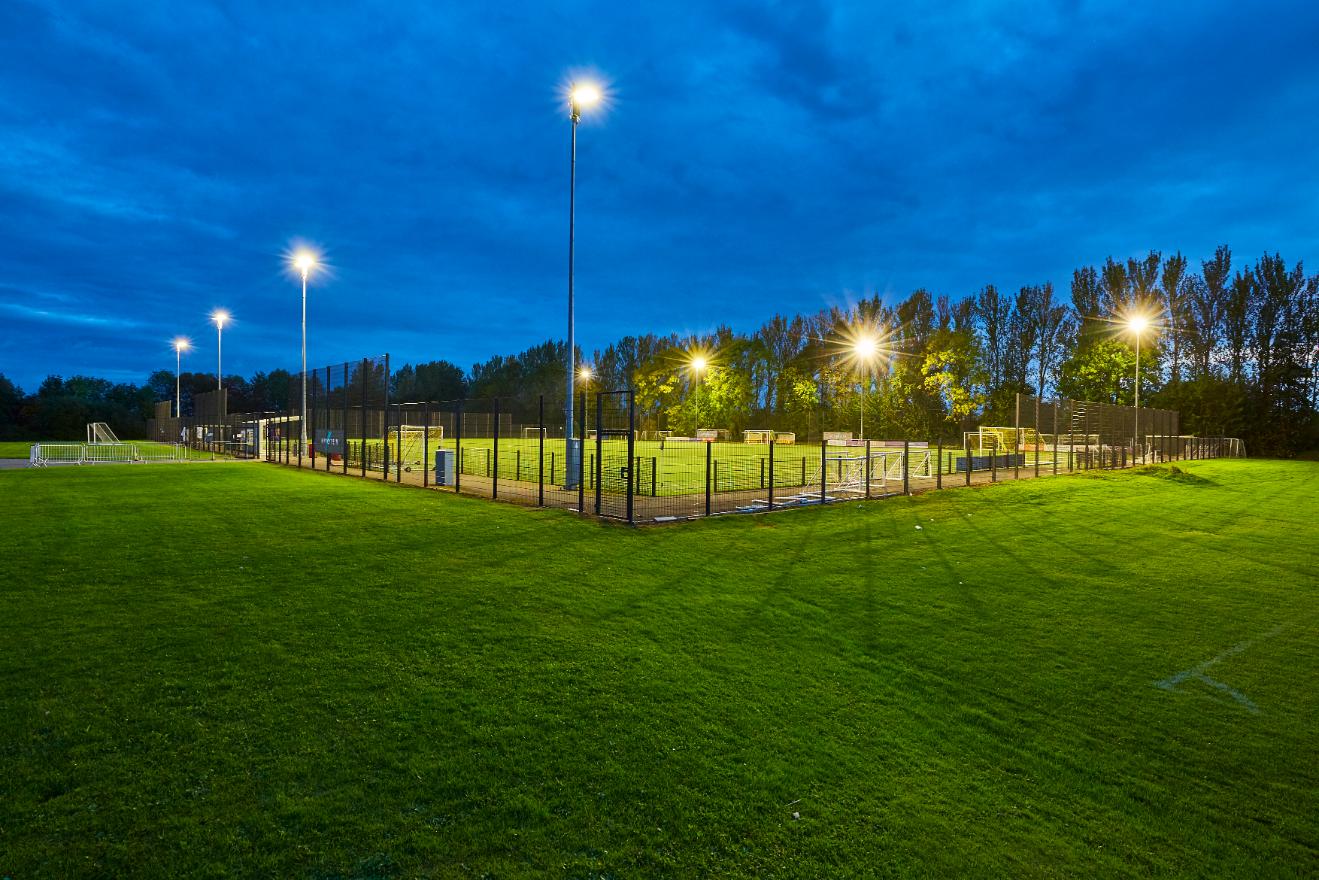 LED floodlighting delivering precise lux levels and uniformity on a sports pitch.
Optical Control and Uniformity
When specifying floodlighting for sports or high mast environments, beam control is critical.
Modern LED luminaires offer a wide range of optical distributions, enabling designers to precisely direct light where it is needed — and control where it is not.
This level of precision delivers measurable performance benefits:
- Improved uniformity ratios across the playing surface or operational area
- Reduced glare for players, officials and operators
- Minimised spill light, supporting planning approval and environmental compliance
- Greater efficiency by avoiding overlighting and overspecification
For sports projects, achieving the required lux levels is essential, but maintaining consistent light quality across the entire pitch is equally important.
In high mast applications, effective optical control ensures that increased mounting heights do not compromise ground-level performance.
By selecting luminaires with purpose-engineered optics, lighting schemes can deliver both regulatory compliance and visual comfort.
 High mast floodlighting with engineered optics for performance and compliance.
Energy Efficiency and Efficacy
Energy performance is now central to sports and high mast floodlighting projects.
With rising operational costs and increasing pressure to meet sustainability targets, selecting high-efficacy LED floodlights can significantly reduce long-term energy consumption without compromising light quality.
Modern performance luminaires can achieve efficacy levels exceeding 180 lm/W, enabling designers to:
- Reduce overall system wattage
- Lower running costs
- Improve carbon performance
- Support public sector and ESG commitments
However, high efficacy alone does not define a high-performance floodlight.
True efficiency is achieved when optical precision and lumen output are carefully balanced — ensuring light is directed accurately, minimising waste and preventing overspecification.
In performance-critical environments, the objective is not simply to generate more lumens, but to use them intelligently.
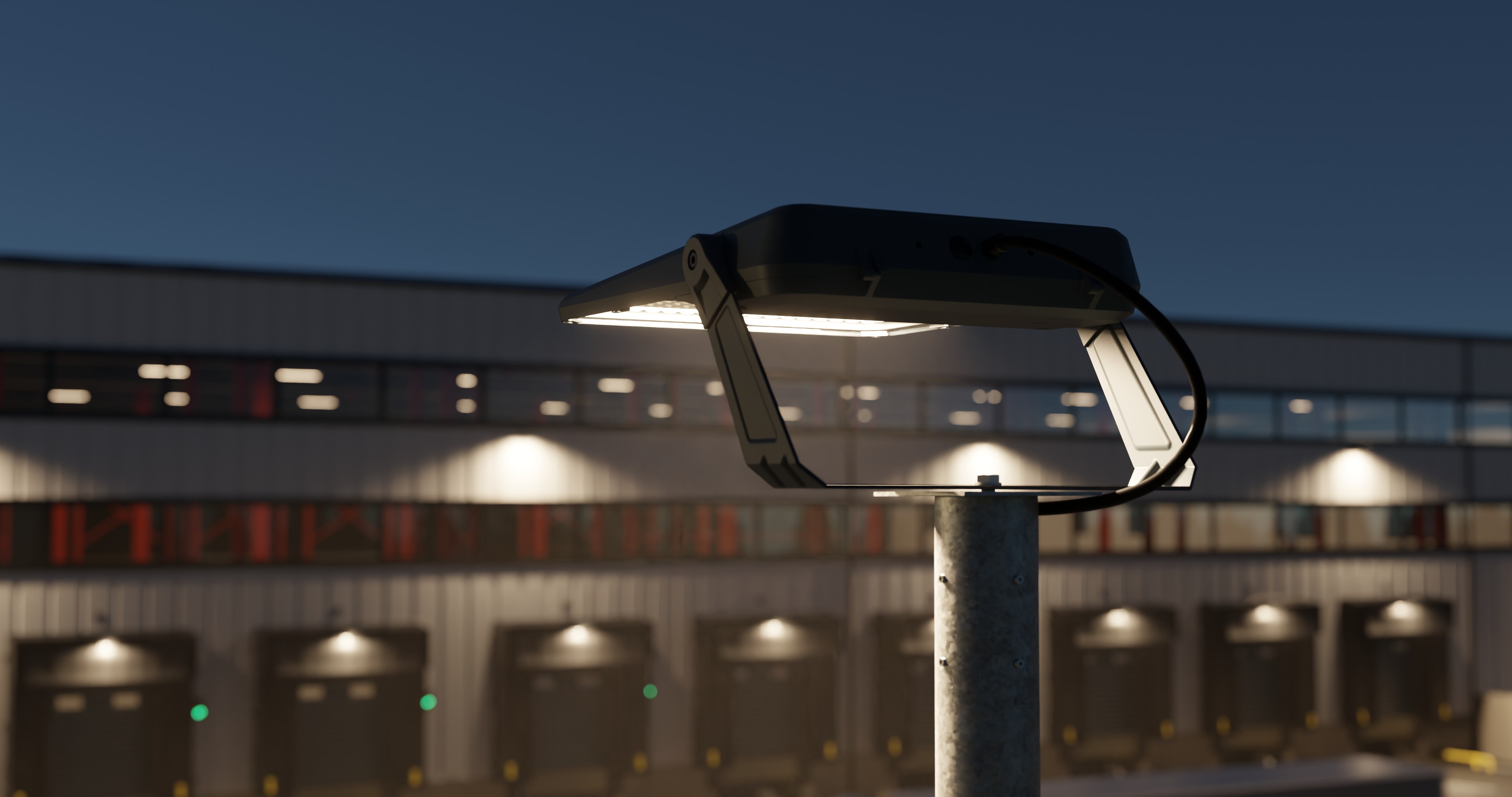
 Real-world application of LED floodlighting delivering performance and durability on site.
Lumen Maintenance and Lifecycle Performance
Floodlighting installations are long-term infrastructure assets.
For sports facilities and high mast environments, performance must remain consistent over years — not just at commissioning.
Lumen maintenance is therefore a critical specification consideration. A luminaire with a 100,000-hour design life (L90) provides significantly greater long-term output stability than solutions based on lower maintenance thresholds.
This supports:
- Reduced maintenance interventions
- Lower access equipment costs
- Improved budget forecasting
- Greater operational reliability
Selecting luminaires engineered for sustained performance ensures schemes continue to meet required lux levels and uniformity targets throughout their operational life.
Structural Durability and Environmental Protection
Sports and high mast floodlighting installations are frequently exposed to demanding environmental conditions.
From coastal corrosion and industrial pollutants to wind loading at height, luminaires must be engineered for resilience as well as optical performance.
Key considerations include:
- IP66 ingress protection against dust and water
- Impact resistance (IK ratings) for long-term durability
- Corrosion-resistant finishes for marine or exposed environments
- Structural stability at mounting height
When specifying LED floodlighting, performance must extend beyond light output to encompass environmental longevity and structural reliability.
From Specification to Installation and Ongoing Support
Selecting the right LED floodlight is only one component of delivering a successful sports or high mast lighting scheme.
Accurate lighting design, compliance verification and long-term maintenance planning are equally important to ensure performance targets are achieved — and sustained.
At Kingfisher Lighting, we support projects through a comprehensive approach that includes:
- In-house lighting design and detailed photometric modelling
- Compliance support for sports governing bodies and planning authorities
- Installation services tailored to sports and high mast environments
- Ongoing maintenance and asset management support
By combining high-performance luminaires with technical expertise and lifecycle support, lighting schemes can be delivered with confidence — from initial concept through to long-term operation.
The VASTA series has been developed in line with the performance principles outlined above, offering a versatile solution across sports, high mast and wider exterior applications.
When performance, compliance and longevity are priorities, specification must extend beyond product selection to encompass the full lifecycle of the installation.