



How Does Solar Lighting Work?
A practical guide to how off-grid solar street lighting captures energy, stores it, manages it and delivers reliable illumination overnight.
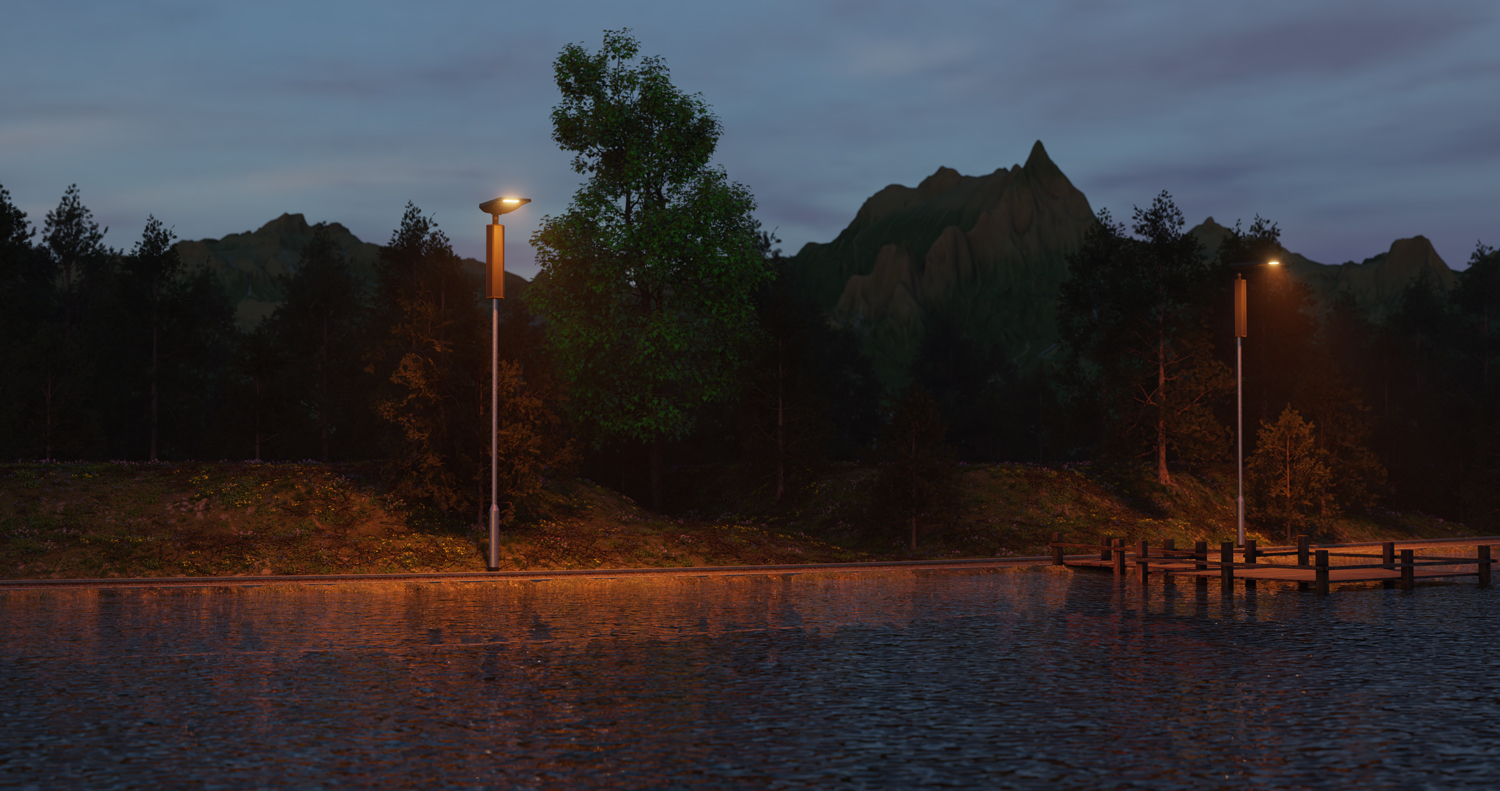
Modern systems use intelligent energy management to balance output and runtime through the night.
How does solar lighting work? At first glance, solar lighting can seem overly complicated. However, when broken down, it is a straightforward process of generating energy during the day, storing it and then utilising it at night.
In this article, we explore how solar lighting works and the benefits of using solar technology across your sites.
There are four key stages to every solar lighting installation – generate, store, control and illuminate. The quality and specification of each component ultimately determines performance.

Generating Solar Energy – How Photovoltaic Panels Work
Solar panels contain photovoltaic (PV) cells, typically manufactured from crystalline silicon. These cells absorb solar radiation in the form of photons. When photons strike the semiconductor material, they release electrons, generating direct current (DC) electricity.
Once generated, this electrical energy is transferred from the panel to the battery system, where it is stored for use after sunset.
Storing the Energy – LiFePO4 Battery Technology
Reliable solar lighting depends on battery technology with strong cycle life and long-term stability.
Kingfisher Lighting utilises lithium iron phosphate (LiFePO4) batteries within our solar luminaires. LiFePO4 is known for:
- Excellent thermal stability
- Long cycle life
- High depth-of-discharge tolerance
- Consistent performance across temperature variations
This chemistry supports dependable year-round operation, even during periods of reduced daylight.
Modern solar street lighting systems are engineered to maintain reliable performance throughout the year, even in changing UK weather conditions.
Controlling Energy – System Control and Energy Management
The controller regulates the flow of electricity between the panel, battery and luminaire.
- Prevents overcharging and excessive discharge
- Manages battery protection functions
- Automatically detects day-to-night transitions
- Enables programmed dimming profiles
By managing charge cycles effectively, stored energy is used efficiently while protecting long-term battery health.
Illuminating Sites with Solar Street Lighting
As daylight levels reduce, the controller draws stored energy from the battery to power the luminaire.
Light output can be adjusted throughout the night to match demand. During quieter periods, the fitting may dim to conserve stored energy before increasing again when movement or activity is detected.
Through intelligent energy management and appropriate system sizing based on local solar irradiance data, modern solar luminaires can maintain reliable performance across changing weather patterns and seasonal daylight variation.

Looking for an integrated solar street lighting solution?
CERO Solar Street combines panel, battery, controller and luminaire into one coordinated system for dependable off-grid illumination.
Explore CERO Solar Street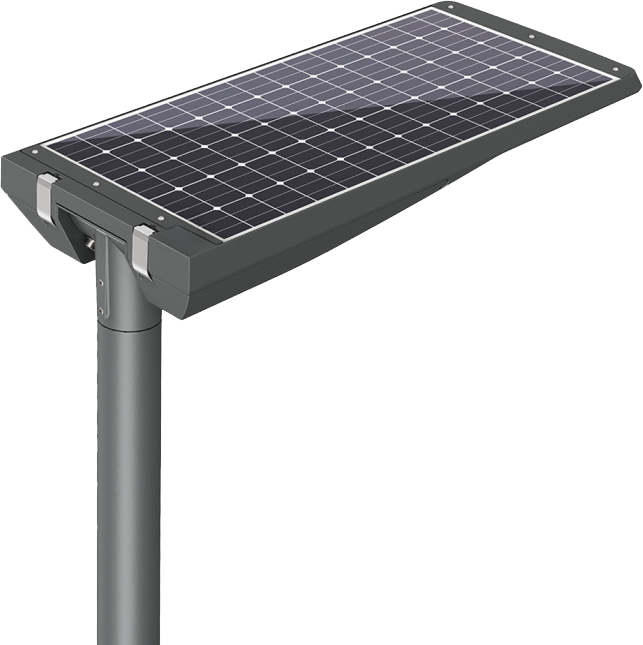
Frequently Asked Questions
Do solar street lights work in the UK?
Yes. Modern photovoltaic panels generate electricity from both direct sunlight and diffuse daylight, meaning charging can still occur during overcast conditions. Correct system design and battery sizing allow reliable performance throughout the year.
How long will a solar street light operate for?
Runtime depends on battery capacity, charging conditions and the programmed dimming profile. Most professional solutions are designed to provide illumination throughout the night, including during winter months.
What is an integrated solar street light?
An integrated unit combines the panel, battery, controller and luminaire into one coordinated product. This simplifies specification and helps ensure all components are designed to operate together efficiently.