Solar lighting technology
How solar works
The photovoltaic effect is a physical and chemical process that generates voltage and electrical current within a material when exposed to light. When sunlight strikes a solar panel, its energy is absorbed by the panel’s semiconductor materials, producing direct current (DC) electricity. This electricity is used to charge an integrated battery, which then supplies power to the luminaire.
At Kingfisher Lighting, our solar solutions harness the latest advances in solar technology, combined with premium-grade materials, to ensure consistently high levels of product quality, reliability and performance.
Alongside the LED light source, every off-grid solar lighting system relies on three essential components: the solar panel, the battery and the control system.
Lithium iron phosphate batteries
Our solar solutions utilise lithium iron phosphate (LiFePO4) batteries which offer significant advantages over other battery types due to their higher energy density, including added safety, longer lifespan and a wider operational temperature range.
Intelligent control systems
All Kingfisher solar solutions are equipped with intelligent lighting controllers to maximise battery efficiency. Built-in motion detection automatically regulates light levels during low-activity periods, reducing energy consumption while ensuring dependable, consistent illumination from dusk to dawn.
Monocrystalline panels
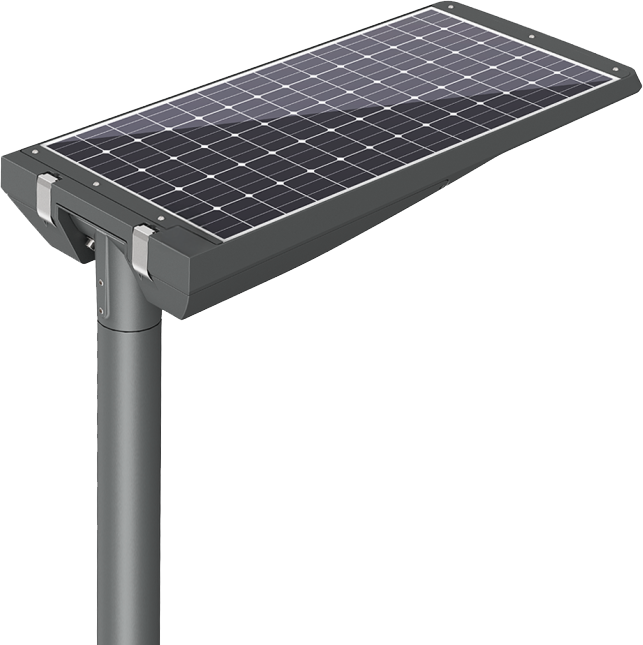
Photovoltaic (PV) cells convert light energy directly into electricity; however, not all solar panels are created equal. At Kingfisher Lighting, we specify high-performance monocrystalline panels, manufactured from single-crystal silicon. This technology delivers superior efficiency and more consistent performance compared to alternative panel types.